
Blog
How Fleet Dashcams Improve Driver Safety, Accountability, and Risk Management

Introduction
The commercial transportation and logistics industry is navigating an era of unprecedented operational complexity. Today, fleet managers face a perfect storm of rising fuel costs, severe driver shortages, escalating insurance premiums, and the looming threat of “nuclear verdicts”—legal judgments against trucking companies that exceed $10 million. In this high-stakes environment, traditional management methods are no longer sufficient. To protect assets, preserve profit margins, and ensure public safety, modern fleets must transition from reactive monitoring to proactive prevention.
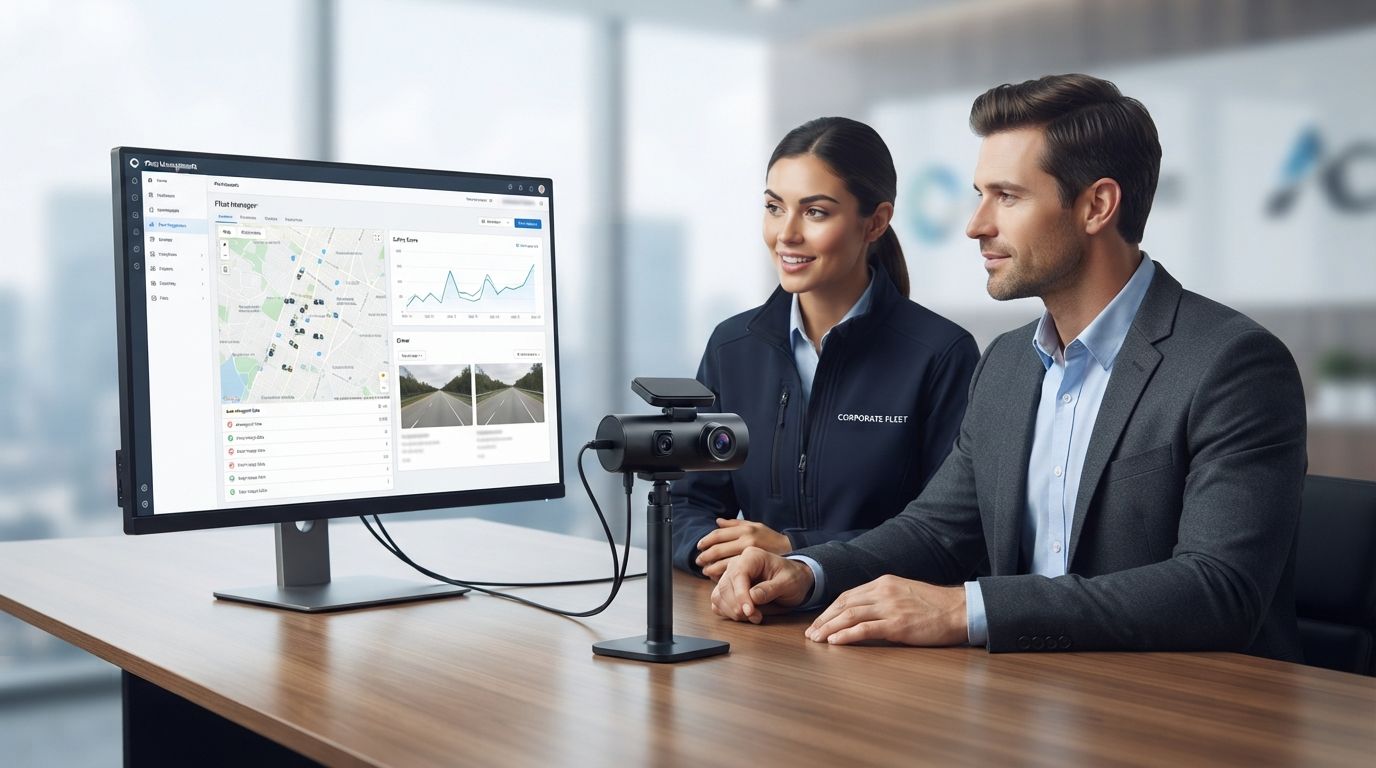
At the center of this technological revolution is the intelligent video telematics system. Understanding How Fleet Dashcams Improve Driver Safety, Accountability, and Risk Management has become a fundamental requirement for any forward-thinking fleet operator. No longer simple, passive recording devices, modern dashcams are advanced, Internet of Things (IoT) edge-computing devices powered by Artificial Intelligence (AI). They act as vigilant co-pilots, objective witnesses, and invaluable training tools.
Implementing these sophisticated systems requires expert integration. Leading fleets often partner with specialized technology providers like Sevcore Technologies to deploy, optimize, and maintain their hardware and network infrastructure, ensuring that high-definition video data is seamlessly captured, processed, and utilized when it matters most. This article provides a comprehensive, deep-dive analysis of how intelligent fleet dashcams transform modern fleet operations across three critical pillars: safety, accountability, and risk management.
The Evolution of Fleet Monitoring: From Passive GPS to AI-Powered Video Telematics
To fully appreciate the impact of modern dashcams, one must understand the evolution of fleet monitoring technology. For decades, fleet tracking relied entirely on passive Global Positioning System (GPS) telematics. While GPS provided valuable “where” and “when” data—tracking vehicle coordinates, idle times, and basic speed metrics—it lacked the context of “why” and “how.”
Legacy Tracking vs. Modern Video Telematics
Legacy telematics systems could detect a hard braking event, but they could not determine the cause. Did the driver slam on the brakes because they were distracted by a mobile device, or did they perform an emergency maneuver to avoid a pedestrian who stepped off the curb? Without video context, fleet managers were forced to make assumptions, often leading to unfair disciplinary actions or missed coaching opportunities. Modern video telematics bridges this context gap by pairing telemetry data (speed, g-force, location) with high-definition video footage of both the road and the driver cabin.
The Role of Artificial Intelligence (AI) and Machine Vision (MV)
The true paradigm shift in fleet dashcams is the integration of Machine Vision (MV) and Artificial Intelligence (AI). Traditional dashcams required manual footage review, consuming hours of administrative time. AI-powered dashcams analyze video feeds in real-time right on the device (edge computing). These systems are trained to recognize specific visual patterns and driver behaviors, such as:
- Distracted Driving: Detecting when a driver’s eyes leave the road to look at a smartphone, GPS screen, or clipboard.
- Fatigue and Drowsiness: Identifying prolonged eyelid closure, frequent yawning, or micro-sleeps.
- Unsafe Behaviors: Spotting seatbelt non-compliance, smoking, or eating while driving.
- Tailgating and Lane Drift: Monitoring the vehicle’s position relative to surrounding traffic and lane markings.
By processing these visual cues instantly, AI-enabled cameras can issue immediate in-cab alerts, allowing drivers to correct their behavior before an incident occurs.
How Fleet Dashcams Improve Driver Safety, Accountability, and Risk Management
The integration of video telematics directly addresses the three most vital aspects of fleet operations. By examining each pillar individually, we can see how this technology serves as a comprehensive operational shield.
1. Elevating Driver Safety Through Real-Time Feedback and Coaching
Driver safety is the cornerstone of any successful fleet operation. Unsafe driving behaviors not only lead to tragic accidents but also accelerate vehicle wear-and-tear, increase fuel consumption, and damage corporate reputation. Implementing AI dashcams directly addresses these issues through dynamic, double-loop learning systems.
First, the camera provides immediate, in-cab audio alerts when unsafe behaviors are detected. For example, if a driver begins to drift out of their lane without signaling, or if their following distance behind another vehicle drops below a safe threshold, the camera emits a localized alert. This immediate feedback loop allows the driver to make instant corrections, preventing collisions in real-time.
Second, these events are logged into centralized cloud databases, creating personalized driver safety profiles. Instead of generalized safety meetings, fleet managers can use objective video evidence to conduct highly targeted, constructive coaching sessions. Showing a driver actual footage of their tailgating habits or phone usage is far more impactful than abstract statistics. Over time, this targeted coaching fosters a proactive safety culture where drivers take active ownership of their on-road habits.
2. Establishing Absolute Accountability Across the Fleet
Accountability is a two-way street that protects both the company and the driver. In the event of an accident, commercial drivers are often unfairly blamed. The sheer size and weight of commercial vehicles create a natural bias among the public, law enforcement, and insurance adjusters, who frequently assume the commercial driver was at fault.
Statistics consistently show that in multi-vehicle collisions involving large trucks, the passenger vehicle driver is at fault in approximately 80% of cases. Dashcams provide the objective, irrefutable evidence needed to establish absolute accountability. When a passenger vehicle cuts off a heavy truck and slams on the brakes, the forward-facing dashcam captures the entire sequence of events. This clear visual record vindicates innocent drivers, protects their commercial driver’s licenses (CDLs), and maintains their professional standing.
Furthermore, dual-facing cameras establish internal accountability. They ensure that drivers adhere to company policies, use safety equipment properly, and remain focused on the road. This transparent environment eliminates the “he-said, she-said” dynamic, establishing a clear standard of professionalism across the entire organization.
3. Transforming Risk Management and Reducing Legal Vulnerability
For fleet operators, risk management is a matter of financial survival. The rise of “nuclear verdicts” and aggressive plaintiff litigation has made fleets highly vulnerable to catastrophic financial losses. Plaintiffs’ attorneys often employ the “Reptile Theory,” attempting to prove to juries that a fleet operator has a systemic disregard for public safety, thereby justifying massive punitive damages.
By demonstrating a comprehensive understanding of How Fleet Dashcams Improve Driver Safety, Accountability, and Risk Management, organizations can effectively dismantle these legal strategies. When a fleet uses AI-powered dashcams, they possess a documented history of proactive risk mitigation. They can prove that they actively monitor driver behavior, provide structured coaching, and take immediate corrective action when safety policies are violated.
In the legal arena, speed of resolution is critical. When an accident occurs, having instant access to cloud-stored dashcam footage allows risk managers and legal teams to make rapid, informed decisions. If the commercial driver was indeed at fault, the fleet can settle the claim quickly and quietly, avoiding protracted, expensive litigation. Conversely, if the video proves the commercial driver was not at fault, the fleet can present the evidence to law enforcement and plaintiff attorneys immediately, often stopping fraudulent or exaggerated claims in their tracks.
Key Features of Modern Fleet Dashcams
Not all fleet dashcams are created equal. To maximize safety, accountability, and risk management benefits, fleets must deploy systems equipped with specific, advanced features. When selecting a hardware and software ecosystem, several critical components must be prioritized.
Dual-Facing and Multi-Camera Configurations
While a simple forward-facing camera provides valuable context of the road ahead, it leaves significant blind spots. A dual-facing camera system—combining a road-facing camera with an interior, cabin-facing sensor—offers a complete picture. To extend this coverage further, advanced fleets utilize multi-camera configurations, adding side-view cameras to monitor blind spots during lane changes and rear-facing or interior cargo cameras to prevent theft and verify secure loading practices.
Cloud Connectivity and Edge Computing
Modern dashcams must feature high-speed cellular connectivity (4G LTE or 5G). This allows the camera to perform edge computing, analyzing video feeds locally on the device, while maintaining a constant connection to cloud servers. When a critical event is triggered—such as a collision, harsh cornering, or an AI-detected distraction—the system automatically uploads a 10-to-20-second video clip of the event to the cloud. This ensures that fleet managers are notified instantly and have immediate access to crucial footage, even if the vehicle’s physical memory card is damaged or lost in an accident.
Advanced Driver Assistance Systems (ADAS) and G-Sensor Integration
High-quality dashcams integrate seamlessly with a vehicle’s internal computer system (via the CAN bus) and utilize internal multi-axis G-sensors. This integration allows the camera to correlate video footage with precise vehicle telemetry, such as exact speed, acceleration rates, braking pressure, and cornering forces. Additionally, built-in ADAS features provide forward collision warnings, lane departure warnings, and pedestrian detection, acting as an extra layer of automated safety.
Quantifying the ROI: Comparative Analysis of Fleet Technology
Implementing an advanced fleet dashcam solution is a significant financial investment. To justify this expenditure to stakeholders, fleet managers must understand the tangible, quantitative return on investment (ROI). The table below compares the performance, cost-reduction, and safety metrics of fleets using legacy GPS tracking versus those utilizing advanced AI-powered video telematics.
| Metric / Operational Area | Legacy GPS Tracking Only | AI-Powered Video Telematics | Operational & Financial Impact |
|---|---|---|---|
| Average Collision Frequency | Baseline industry standard | Reduced by 35% to 60% | Fewer vehicle repairs, less downtime, and preserved asset values. |
| Insurance Premium Impact | Standard annual rate increases | 10% to 25% premium discounts | Direct, predictable reduction in annual operating overhead. |
| Claims Resolution Time | Weeks to months (often requiring legal counsel) | Minutes to hours (instant proof) | Elimination of frivolous lawsuits and dramatic reduction in legal fees. |
| Driver Coaching Efficacy | Low (based on generic feedback and manual logs) | High (highly targeted, video-backed sessions) | Rapid behavior modification and long-term safety culture growth. |
| Fuel Efficiency & Wear | Unmonitored aggressive driving | 5% to 10% improvement | Reduced fuel spend and extended life of brakes, tires, and engines. |
Overcoming Driver Resistance and Fostering a Safety-First Culture
One of the most common challenges in deploying fleet dashcams is driver resistance. Many professional drivers view cab-facing cameras as an intrusive violation of their privacy, often referring to them as “Big Brother.” If not managed correctly, this pushback can lead to driver turnover, low morale, and even deliberate tampering with the hardware.
Addressing Privacy Concerns Openly and Transparently
To successfully implement a dashcam program, fleet management must address driver concerns with absolute transparency. It is vital to communicate that the primary purpose of the camera is to protect the driver, not spy on them. Management should establish and share clear, written policies regarding data access and privacy, such as:
- Event-Only Recording: Clarifying that the cabin camera does not continuously stream video to office staff. It only uploads short clips when a critical safety event is triggered.
- In-Cab Privacy Masks: Utilizing physical lenses or software-based privacy masks that obscure the driver’s face during off-duty hours or rest breaks.
- Restricted Access: Limiting video access to authorized safety managers and legal personnel, ensuring footage is never used for casual or non-safety-related scrutiny.
Implementing Reward-Based Gamification and Incentive Programs
The most successful fleets transition their dashcam program from a disciplinary tool to a positive reinforcement system. By gamifying driver safety scores, managers can foster healthy competition and boost morale. Many modern video telematics platforms generate a daily or weekly “Safety Score” for each driver based on their compliance, smooth driving, and absence of AI-triggered alerts.
Fleets can tie these scores directly to monthly or quarterly performance bonuses. Recognizing and rewarding top-performing drivers—and those who show the most significant improvement—shifts the narrative. Dashcams are no longer viewed as a threat, but rather as an objective tool that helps drivers prove their professionalism and earn financial rewards.
Key Takeaways for Fleet Managers
To summarize the core concepts discussed in this comprehensive guide, fleet managers should keep the following actionable points in mind:
- Context is King: Traditional GPS metrics only show that an event occurred; video telematics provides the critical visual context required to understand the underlying causes of driving incidents.
- Proactive Over Reactive: AI-powered edge computing detects unsafe behaviors—such as distraction and fatigue—in real-time, allowing for immediate in-cab correction before accidents happen.
- The Driver’s Shield: Forward-facing dashcams protect commercial drivers from false accusations, exonerating them in approximately 80% of multi-vehicle collisions where they are not at fault.
- Substantial ROI: Implementing video telematics directly reduces collision rates by up to 60%, slashes insurance premiums by up to 25%, and yields massive savings on fuel and vehicle maintenance.
- Culture and Collaboration: Overcoming driver resistance requires transparency, strict privacy policies, and a shift toward reward-based gamification rather than purely punitive enforcement.
Frequently Asked Questions
1. Do AI fleet dashcams record and stream video 24/7?
No. While modern dashcams continuously monitor the road and cabin for safety analysis, they do not continuously stream or upload 24/7 video to the cloud. Doing so would consume excessive cellular data. Instead, they operate on an “event-trigger” basis, uploading short 10-to-20-second video clips only when a critical safety threshold (like hard braking, rapid acceleration, or AI-detected distraction) is breached.
2. Can fleet dashcams withstand severe accidents and extreme weather?
Yes. Enterprise-grade fleet dashcams are built specifically for the demanding environment of commercial transportation. They feature ruggedized, tamper-proof casings, industrial-grade solid-state storage (SD cards designed for high write cycles), and wide operational temperature ranges. Furthermore, because critical event clips are uploaded to the cloud instantly via cellular networks, the vital evidence is preserved even if the physical camera is destroyed in a severe crash.
3. How do dashcams reduce fleet insurance costs?
Insurance providers calculate premiums based on risk. Fleets equipped with AI-powered video telematics present a significantly lower risk profile. Many insurance companies offer immediate premium discounts (typically between 10% and 25%) to fleets that install approved dashcam systems. Additionally, by using video evidence to quickly exonerate drivers and settle valid claims out of court, fleets avoid costly legal battles and prevent their loss-run ratios from spiking.
4. What should a fleet do if a driver tampers with or covers a dashcam?
Tampering with safety equipment is a serious operational risk. Modern fleet dashcams feature built-in optical obstruction detection. If a driver covers the lens, tilts the camera away, or disconnects the power cable, the system immediately flags this as a “Tamper Event” and alerts the fleet manager. Fleets should establish a strict, zero-tolerance policy for hardware tampering, treating it with the same level of severity as disabling a vehicle’s brakes or seatbelts.
5. How do AI dashcams minimize “alert fatigue” for drivers?
Alert fatigue occurs when a system generates too many false or low-priority alarms, causing drivers to ignore them. Advanced AI dashcams minimize this by using highly calibrated Machine Vision algorithms that verify behaviors before triggering an alert. For example, instead of alerting on every glance away from the road, the AI calculates the duration and frequency of the distraction, only issuing an audible warning when the behavior crosses a statistically unsafe threshold.
Conclusion
The integration of video telematics is no longer an optional luxury for commercial fleets; it is a vital operational necessity. Understanding How Fleet Dashcams Improve Driver Safety, Accountability, and Risk Management is the first step toward building a highly resilient, efficient, and modern logistics operation. By combining the real-time processing power of Artificial Intelligence with the indisputable clarity of high-definition video, dashcams provide fleet managers with the ultimate tool to protect their drivers, secure their assets, and defend their bottom line.
While the initial investment in hardware and training requires careful planning, the quantitative returns—measured in reduced accident rates, lower insurance premiums, and rapid claims resolution—dwarf the upfront costs. By fostering a collaborative safety culture that rewards professionalism and utilizes objective, video-backed coaching, fleets can navigate the complexities of modern transportation with absolute confidence and peace of mind.